
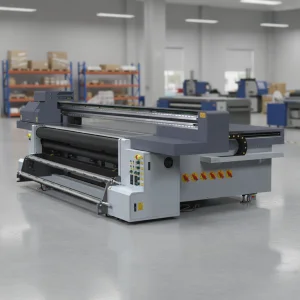
Kuala Lumpur Core Flagship
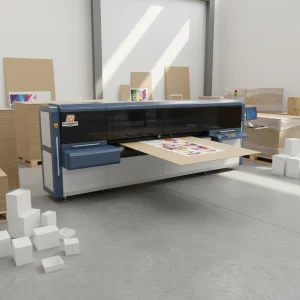
NTEK YC2513R Flatbed & Roll to Roll Hybrid UV Machine
View KL Specifications
Engineered to deliver high throughput and micrometer registration accuracy under tropical production conditions across Selangor and Kuala Lumpur commercial centers.
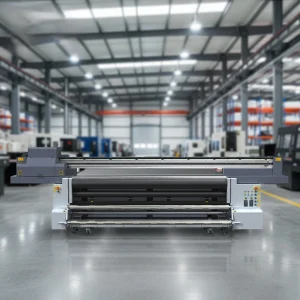
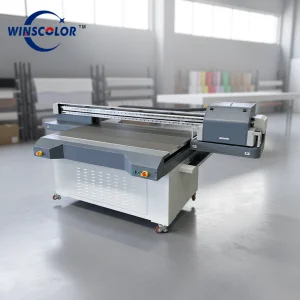
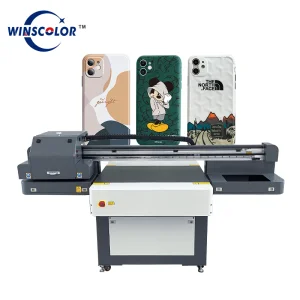
A rigorous examination of shifting production paradigms, supply chain imperatives, and capital equipment demands across Peninsular Malaysia's industrial heartland.
The Greater Kuala Lumpur metropolitan area—encompassing the Federal Territory of Kuala Lumpur and key manufacturing epicenters in Selangor such as Shah Alam, Petaling Jaya, Subang Jaya, Puchong, and Balakong—is undergoing a rapid technological convergence. Traditionally reliant on solvent and eco-solvent roll-to-roll machinery alongside analog screen printing for rigid sheet stock, print service providers (PSPs) and manufacturing contractors are confronting steep structural shifts. Tightening environmental directives under Malaysia’s National Policy on the Environment, coupled with multinational corporate sustainability mandates for zero-VOC emissions, have placed conventional solvent printing on a trajectory of obsolescence.
Concurrently, the rapid expansion of premier commercial retail real estate—including the Tun Razak Exchange (TRX), Bukit Bintang City Centre (BBCC), and high-density lifestyle developments across Mid Valley and Bangsar—has created unprecedented demand for ultra-high-resolution, customized architectural finishes, tactile Point-of-Sale/Point-of-Purchase (POS/POP) display structures, and rapid turn-around event graphics. In this economic environment, commercial production houses cannot afford separate, single-purpose machinery taking up high-rent floor space. A pure flatbed leaves rolls unaddressed; a pure roll-to-roll machine completely locks out acrylic sheets, aluminum composite panels (ACP), fluted polypropylene, and MDF boards.
Strategic Market Reality: Industrial facilities located in the industrial clusters of Klang Valley face average industrial real estate rental costs between RM 1.80 and RM 2.80 per square foot. Capital equipment that unifies dual production modes—rigid substrates and flexible continuous media—effectively cuts physical floor footprint overhead by up to 45% while eliminating redundant secondary operator staffing.
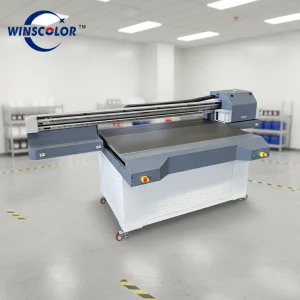
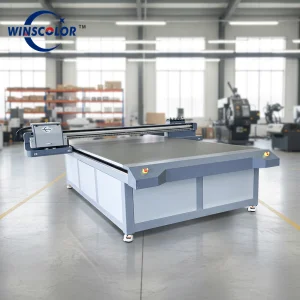
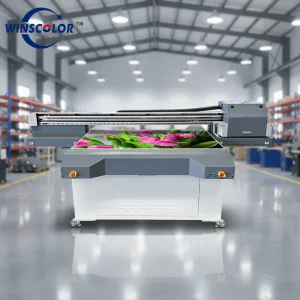
This structural pressure is precisely where the NTEK YC2513R establishes decisive competitive advantage. Engineered with a true 2500 mm × 1300 mm precision vacuum bed integrated directly with heavy-duty tension-controlled front and rear continuous roll feeders, the YC2513R enables Malaysian production hubs to switch seamlessly between rigid 10 mm acrylic sheeting for architectural signboards and 50-meter rolls of backlit textiles or flex banner within three minutes. Direct factory sourcing from our Jinan manufacturing facility bypasses multi-tier local middleman markups, arming Kuala Lumpur enterprises with European-tier printhead engineering at an aggressive return-on-investment (ROI) threshold.
Consolidates flatbed and roll systems into an all-in-one chassis, conserving critical square footage in high-density Selangor industrial parks.
Conforms to Malaysian Department of Environment (DOE) guidelines, eradicating solvent vapor ventilation requirements.
Instantaneous dual-LED UV curing eliminates dry-time bottlenecks, enabling same-day delivery for corporate retail rollouts.
A comprehensive architectural breakdown of the motion kinematics, fluid management systems, and micro-piezo drop placement.
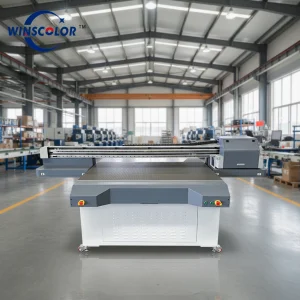
The NTEK YC2513R is not an entry-level conversion system; it is built on a heavy-duty stress-relieved steel gantry and an all-steel welded frame subjected to high-temperature vibration annealing. This mechanical foundation ensures that microscopic frame torsion is eliminated under 24/7 continuous shift operation. When dealing with high-inertia carriage motion across a 2.5-meter crossbeam, micron-level stability dictates dot circularity, edge sharpness, and solid color uniformity.
The YC2513R accommodates staggered configurations of 2 to 8 industrial Ricoh piezo printheads. Depending on the client's output cadence and target resolution profile, buyers select between Ricoh MH5420 (Gen5) and the latest-generation Ricoh MH5320 (Gen6):
The Ricoh Gen6 printhead represents a substantial leap in precision inkjet physics, shrinking native drop volume to an ultra-fine 5 picoliters with multi-level grayscale modulation (5pl, 10pl, 15pl). Operating at a jetting frequency of up to 50 kHz (compared to 30 kHz on Gen5), Gen6 printheads yield up to a 35% speed improvement at identical pass counts. For Malaysian signage printers producing ultra-high-definition cosmetic lightboxes or luxury product displays, the variable drop system eliminates visible halftone dithering, delivering skin tones and color transitions comparable to traditional silver-halide photographic prints.
Ink stabilization represents the primary failure point in non-industrial UV printing. The YC2513R implements an independent dual-channel negative pressure control system with digital pressure gauges accurate to ±0.01 kPa. By continuously regulating the meniscus vacuum within the ink chambers of both color channels and white/varnish circuits, the system prevents ink leakage during high-speed carriage acceleration while eradicating nozzle starvation under prolonged 8-pass solid coverage.
Furthermore, because titanium dioxide pigments in white UV inks possess high specific gravity and settle rapidly, the YC2513R incorporates an automated closed-loop white ink stirring and continuous manifold recirculation system. This ensures pigments remain homogeneously suspended from the primary bulk tanks through the secondary sub-tanks down to the nozzle plate, completely circumventing head clogging.
Carriage movement along the X-axis is guided by Japanese THK dual ultra-silent linear guide rails matched with a high-resolution metal raster strip and optical magnetic encoder. Driven by a Japanese Panasonic high-torque AC servo motor, the carriage achieves zero-backlash positioning accuracy of ±0.02 mm across the entire 2500 mm span. This high mechanical rigor ensures that when performing double-sided back-to-back printing or building multi-layered 3D embossed tactile varnish textures, every droplet registers perfectly with the preceding layer.
| Subsystem / Parameter | Standard YC2513R Specification | Advanced Gen6 Upgrade Option |
|---|---|---|
| Effective Printable Bed Area | 2500 mm × 1300 mm (Rigid Sheet Flatbed) | Zoned High-Flow 4-Section Vacuum Bed |
| Roll-to-Roll Feed Width | Up to 2500 mm Continuous Web | Dual Air-Shaft Constant Tension Unwind/Rewind |
| Printhead Technology | Ricoh Gen5 (7–35 pl Grayscale) | Ricoh Gen6 (5–15 pl Variable Droplet) |
| Maximum Substrate Thickness | 100 mm (Automatic Height Sensing) | Extended 150 mm Gantry Clearance |
| Curing System Architecture | Dual Water-Cooled LED-UV Curing Lamps | Stepless Adjustable Power Control (0–100%) |
| Ink Compatibility | Rigid, Flexible, or Neutral UV Curable | CMYK + LC + LM + White + Gloss Varnish |
| Vacuum Chamber Power | 2.2 kW High-Torque Centrifugal Blower | Dual Independent Inverter-Controlled Turbines |
| RIP Software Compatibility | Photoprint / Onyx / Caldera | ColorGATE Production Server Advanced |
| Input Electrical Spec | AC 220V / 380V ±10%, 50Hz (Malaysian Standard) | Integrated Dedicated Voltage Surge Stabilizer |
Targeted manufacturing workflows engineered to unlock high profit margins across architectural, retail, industrial, and packaging segments.
Delivers direct printing on tempered glass backsplashes, acoustic wall panels, sintered stone slabs, and customized ceiling grids without pre-lamination delamination risks.
Multi-layer simultaneous printing (Color + White + Color) creates stunning daytime/nighttime backlit displays for luxury boutiques in Pavilion KL and Suria KLCC.
Utilizes ultra-flexible UV inks on polycarbonate (PC) and PET films for automotive switchgear, medical control panels, and consumer appliance faceplates.
Malaysia's high-end commercial property sector demands rigorous customization. With interior architectural firms pivoting toward ceramic frit effects, simulated marble vein continuity, and optical frost diffusion on partition glass, conventional screen printing is hindered by excessive setup costs and lengthy lead times. The YC2513R incorporates dedicated industrial glass primer application protocols. By utilizing proprietary silane-coupling primers deposited through digital channels or wipe-on adhesion promoters, ink bond strength on non-porous float and tempered glass reaches Cross-Hatch 5B adhesion rating (ASTM D3359), withstanding extreme tropical humidity without edge peeling.
Selangor is an essential hub for electro-mechanical sub-assembly in Southeast Asia. The YC2513R serves tier-2 and tier-3 electronic contract manufacturers producing industrial membrane switches, instrument panels, and powder-coated steel chassis faceplates. Operating with ultra-flexible ink chemistry possessing an elongation modulus exceeding 220%, sheets printed on the YC2513R can be routed, CNC die-cut, and embossed without edge micro-cracking or ink delamination along stress folds.
Uncompromising manufacturing rigor from our 20,000-square-meter facility in Jinan, China, delivering factory-direct economics to Southeast Asian buyers.
The manufacturing backbone behind NTEK and Winscolor (Jinan Yingcai Digital Technology Co., Ltd) rests upon an integrated smart manufacturing campus spanning more than 20,000 square meters. Unlike assembly workshops that procure cheap commercial steel frames and wire off-the-shelf control kits, our Jinan facility enforces vertical integration throughout every production milestone:
For print house owners in Kuala Lumpur, buying directly from our manufacturing source eliminates multi-layered regional agent distributor markups that typically inflate capital costs by 30% to 50%. Furthermore, direct factory channels ensure instant access to verified OEM replacement components, firmware updates, and factory engineering consultation without distributor delays.
Request comprehensive equipment pricing, custom ink configurations, and air-freight or sea-freight logistics timelines directly to Port Klang, Malaysia.
Navigating tropical climate stabilization, electrical compliance, and rapid SLA field support throughout Greater Kuala Lumpur.
Operating high-precision digital inkjet machinery in Malaysia presents distinct ambient challenges. Peninsular Malaysia maintains average daytime relative humidity between 70% and 90%, paired with ambient temperatures frequently hovering between 30°C and 35°C in warehouse setups lacking climate-controlled HVAC. Elevated humidity alters substrate surface energy, induces condensation on chilled carriage components, and destabilizes droplet flight paths via static charge accumulation.
The YC2513R units destined for the Malaysian market feature an integrated industrial electrostatic eliminator bar mounted on the carriage gantry, actively ionizing the substrate boundary layer immediately prior to droplet deposition. This suppresses static electricity deflection on synthetic plastics like acrylic, PVC foam board, and polypropylene fluted sheets. Furthermore, printhead manifold baseplates incorporate automated heating blocks that stabilize ink viscosity precisely at 42°C–45°C regardless of external ambient temperature fluctuations.
Every electrical enclosure deployed on our YC2513R is fully wired in strict accordance with the Energy Commission of Malaysia (Suruhanjaya Tenaga - ST) requirements and international CE / IEC 60204-1 safety machinery guidelines. Systems feature isolated three-phase power routing, Schneider industrial circuit breakers, safety interlock interrupters, and photoelectric gantry anti-collision crash sensors that stop carriage motion within 5 milliseconds upon detecting physical obstruction, completely protecting costly printheads from operator handling errors.
Winscolor provides robust technical warranty frameworks for enterprises in Kuala Lumpur. Through remote IoT diagnostic telematics, factory-certified field technicians resolve software, RIP profile, and color calibration inquiries in real-time. Where mechanical or electrical component replacements are warranted, critical assemblies—including secondary sub-tanks, ink pumps, filter cartridges, solenoid valves, and linear encoders—are dispatched from regional hubs serving the Klang Valley corridor, backing our commitment to minimal downtime.
A data-backed financial model breaking down initial capital outlay, consumable operating costs, and revenue generation horizons for Malaysian print operations.
Prudent CFOs and commercial print directors evaluate capital printing assets not by retail purchase price alone, but by fully burdened Total Cost of Ownership over a standard 5-year operating window. Below is a comparative production model based on a medium-to-high capacity commercial signage shop in Petaling Jaya or Shah Alam operating one 8-hour shift daily (25 working days/month):
| Cost Driver / Parameter | Legacy Eco-Solvent + Screen Setup | NTEK YC2513R Hybrid UV Solution | Financial Advantage / Impact |
|---|---|---|---|
| Ink Consumable Cost | RM 0.18 – RM 0.25 per ml (Solvent) | RM 0.12 – RM 0.16 per ml (Bulk UV OEM) | ~35% Direct Reduction in Consumable Outlay |
| Average Ink Consumption | 12–15 ml/m² (Multiple Passes) | 8–10 ml/m² (Variable 5pl Droplets) | Up to 30% Ink Savings per Finished Sheet |
| Substrate Compatibility | Special coated media required | Zero coating: Raw glass, wood, ACP, vinyl | Eliminates 20–40% premium on coated stock |
| Floor Footprint Allocation | 2 Separate Machines (~45 m² needed) | 1 Integrated Machine (~22 m² needed) | Saves ~RM 1,200/month in warehouse rental |
| Setup Time & Screen Make-Ready | 2–4 hours per multi-color screen setup | < 5 minutes digital file RIP processing | Enables profitable short-run orders (1–50 units) |
| VOC Emissions & Ventilation | Exhaust ducting & DOE compliance scrubbers | Zero-VOC LED curing: No exhaust stack needed | Avoids high industrial ducting installation costs |
Under this rigorous operational model, commercial print enterprises transitioning from decentralized older machines to the NTEK YC2513R typically achieve full capital equipment amortization within 7 to 11 months based on prevailing market rates for wide-format graphics across the Klang Valley.
Strategic hardware enhancements driving automation, intelligence, and environmental stewardship across future NTEK platforms.
Integrated high-speed CCD line cameras will detect missing nozzles and media skew in real-time, executing automated self-purging compensation without aborting active production runs.
Multi-device production monitoring enables corporate executives in Kuala Lumpur to track ink consumption, production linear meterage, and preventive maintenance milestones across distributed branch factories via mobile devices.
Advancements in narrow-band UV-LED chips (385–395nm) will further cut cure electrical draw by 40%, keeping surface thermal load below 32°C for delicate thermal-sensitive films.
Comprehensive engineering clarifications addressing power requirements, transport logistics, ink chemistry, and operator certification.
From single-pass packaging systems to high-speed hybrid continuous rollers, review our specialized hardware configurations tailored for high-output Malaysian enterprises.

Connect directly with our senior engineering team in Jinan. Share your primary substrates, daily square-meter output targets, and target business applications to receive a complete turnkey hardware proposal, localized ICC color profiles, and Port Klang ocean-shipping schedules.