Choosing a Big Printer Machine is not simply a matter of selecting the widest model. A machine may accept a three-meter roll yet perform poorly with your daily materials. The real choice depends on media types, image quality, production speed, ink durability, workspace, and service support. It also depends on what your team can operate confidently.
Frank Romano, a respected printing educator and industry analyst, offers a practical principle: “The best press is the one that fits the job.” That idea applies directly to every Big Printer Machine purchase. A showroom print can look impressive under bright lighting, but your real test should involve textured vinyl, coated paper, fabric, or rigid boards used in actual production. Ask for sample output. Measure drying time. Check fine text and solid color areas.
Specifications can mislead.
This guide explores seven practical tips for choosing the right equipment. It considers print width, resolution, ink technology, workflow compatibility, maintenance access, energy use, and total ownership cost. It also explains why local technical support can matter more than a slightly lower purchase price. A failed printhead during a deadline is not a small inconvenience.
Some decisions remain imperfect. Production needs change. Budgets tighten. Even experienced buyers may underestimate training time or ventilation requirements. That is why careful testing, written service terms, and honest workload estimates are essential. The most reliable choice is rarely the most powerful machine. It is the one that consistently produces the required results, at a sustainable cost, in your actual working environment.
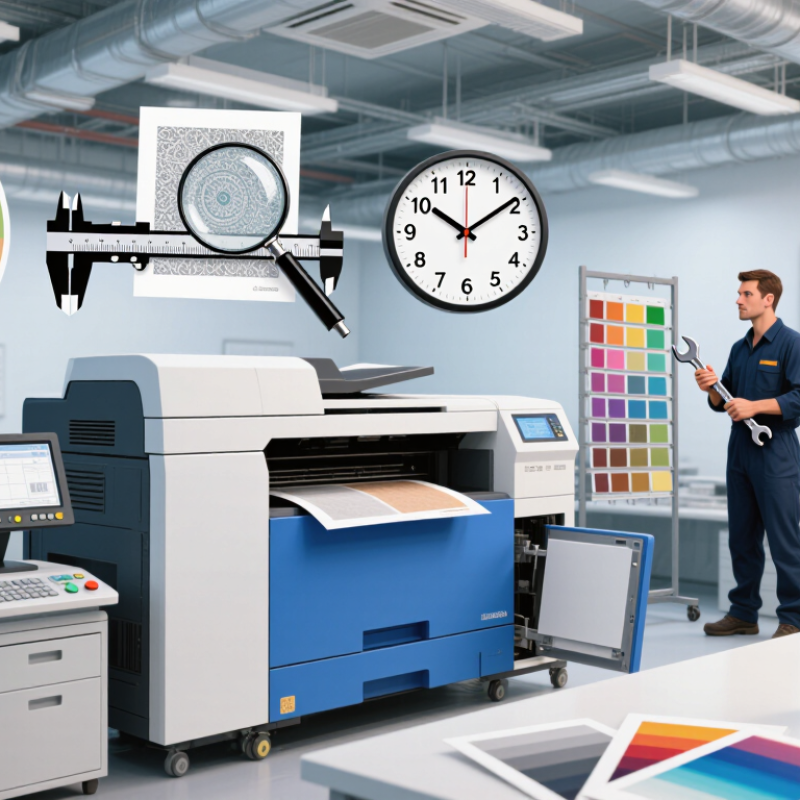
Define Your Large-Format Printing Requirements
Before choosing a big printer machine, define what you will actually print. Measure your widest planned banner, panel, poster, or fabric display. Do not rely on average sizes. One oversized project can change the required machine width. Record your weekly output, peak-season demand, and usual turnaround time. A quiet studio needs different equipment from a busy production room. Start with real samples.
Image quality depends on viewing distance. A roadside sign may not need the same detail as a close-up exhibition graphic. Note your smallest text, fine lines, gradients, and color expectations. Also identify your media types, such as coated paper, vinyl, canvas, or textile. Each material can affect drying time and ink performance. Test the surface before ordering. It prevents expensive surprises.
Think about the working environment. Check ventilation, floor space, power access, and material storage. A machine may fit on paper but block a doorway in practice. My first equipment estimate ignored roll storage, and daily handling became awkward. That mistake changed our layout. Consider operator skill, cleaning routines, software compatibility, and service access. Ask how quickly common parts can be replaced. Calculate the cost per finished print, not only the purchase price. Leave room for waste, maintenance, and failed tests. Perfect predictions are rare. Reliable measurements are better.
7 Tips to Choose the Best Big Printer Machine
Define your large-format printing requirements by matching the application with a practical roll-width range. Common formats include 24, 36, 44, 54, 64, 72, and 126 inches.
Typical Large-Format Media Widths by Application
Use narrower formats for CAD drawings and posters, while banners, vehicle graphics, wall murals, and outdoor displays may require wider printers. Also compare print speed, ink type, resolution, media handling, drying requirements, and total operating cost before choosing a machine.
Compare Printer Types, Sizes, and Print Technologies
7 Tips to Choose the Best Big Printer Machine?
Choosing a large printer starts with the job, not the machine.
Measure the widest finished sheet, roll diameter, and daily output.
A 1.6-meter printer suits many posters and banners. A
3.2-meter model reduces tiling on building graphics. However, oversized equipment wastes space and power when orders remain small.
Check the full production path. Cutting, drying, laminating, and loading can limit speed more than the print engine.
Compare printer types carefully. Roll-to-roll systems handle flexible media efficiently. Flatbeds support rigid boards and reduce manual mounting.
Hybrid machines offer flexibility, but their extra mechanisms may increase maintenance. Then compare print technologies.
Solvent and latex-style systems suit durable outdoor work.
UV-curable systems print directly onto many rigid materials.
Water-based systems can deliver fine detail for indoor graphics.
Smithers reported that digital packaging and label printing could grow from about
22.0 billion dollars in 2024 to 36.9 billion dollars by 2029,
showing why accurate short-run production matters.
Ask for real production samples, not only showroom images. Inspect small text, solid color fields, gradients, and edge sharpness.
Request measured speed at your required quality setting. Ink cost, electricity, ventilation, and waste should enter the calculation.
The FESPA Print Census 2023 identified digital printing as a major growth area for many print companies, but growth does not guarantee profit.
I once underestimated drying time on dense graphics; the schedule looked perfect on paper. It was not.
Choose service access, operator training, and software compatibility with equal care.
Evaluate Print Quality, Speed, and Material Compatibility
7 Tips to Choose the Best Big Printer Machine
Print quality should be judged on real samples, not attractive specifications. Ask for a test print using your intended file, resolution, and material. Examine small text, diagonal lines, gradients, and solid color areas under normal lighting. Look for banding, uneven edges, visible dots, and color shifts between repeated prints. A reliable machine should produce consistent results across the full print bed. Calibration matters more than impressive marketing numbers.
Speed needs practical measurement. Check the time required for setup, warm-up, printing, drying, and finishing. A machine may advertise high output speed, yet complex graphics can reduce production significantly. Request a timed sample with your typical artwork. Measure usable output per hour, not only the movement speed. Quiet operation may also matter in a shared workshop. Faster is not always better.
Material compatibility affects cost and reliability. Confirm whether the printer supports paper, vinyl, fabric, film, rigid sheets, or other planned media. Test thickness, surface coating, flexibility, and ink absorption before purchase. I once trusted a smooth sample and ignored its coating; the ink dried slowly and scratched easily. That mistake changed my testing process. Keep records of temperature, humidity, ink settings, and media batches. Compatibility can vary. Ask whether replacement parts and technical guidance remain available. A machine that prints beautifully on one material may perform poorly on another, especially when humidity changes.
Check Operating Costs, Maintenance, and User-Friendly Features
Choosing the best big printer machine starts with its real operating cost, not its purchase price.
A low-cost model may consume more ink, power, and specialist labor over time. Ask for estimated costs per printed square meter, including media waste and cleaning cycles. Request service records from current users when possible. Their daily experience often reveals more than a sales sheet.
Maintenance should fit your working environment.
Check how easily operators can reach printheads, filters, rollers, and waste containers. Clear access reduces repair time and prevents rushed mistakes. A machine with automatic nozzle checks can protect print quality during long production runs.
Still, automation is not magic. Dust, humidity, and neglected cleaning can damage results quickly.
User-friendly features matter during busy shifts.
Look for a clear control screen, simple job settings, error messages, and safe loading procedures. Remote alerts can help staff respond before a small issue stops production. Test the interface with a real operator, not only a manager. I once trusted an impressive demonstration and overlooked the awkward media-loading process. That mistake cost time every day. Training requirements, spare-part availability, and response times from technicians also deserve careful attention.
Easy to operate. Easier to maintain.
Assess Reliability, Support, and Overall Value Before Buying
7 Tips to Choose the Best Big Printer Machine
Assess Reliability, Support, and Overall Value Before Buying
A large-format printer should match your daily workload, not just your desired image size. Check its duty cycle, media compatibility, print speed, and color consistency. Ask for a real test print using your paper, ink, and typical artwork. Fine text, solid color blocks, and skin tones can reveal problems quickly. A machine may look impressive in a showroom. Your production room is less forgiving.
Reliability depends on more than hardware. Inspect the printhead replacement process, cleaning requirements, error logs, and expected maintenance intervals. Ask how long essential parts remain available. Request references from users with similar workloads. Their experience may expose recurring jams or calibration issues. I once focused too heavily on output speed and underestimated daily cleaning time. That mistake reduced productivity.
Support can protect your investment. Confirm response times, technician coverage, training options, warranty limits, and remote assistance. Get these details in writing. A low purchase price can become expensive through wasted media, unused ink, downtime, and emergency repairs. Calculate the total cost over three years, including electricity and labor. Also check whether the machine fits your workflow, floor space, ventilation, and operator skills. The best value is not always the cheapest machine. It is the one that performs steadily, receives dependable support, and keeps adapting to your real production needs.
Conclusion
Choosing the right Big Printer Machine starts with a clear understanding of your large-format printing needs, including print size, volume, materials, and intended applications. Compare different printer types, available dimensions, and print technologies to find a model that matches your workflow. Pay close attention to image quality, production speed, color consistency, and compatibility with materials such as paper, film, fabric, vinyl, or rigid media.
You should also consider the total cost of ownership, including ink, power consumption, replacement parts, maintenance, and operator training. User-friendly controls, automated features, and simple cleaning procedures can improve efficiency and reduce downtime. Before making a purchase, assess the machine’s reliability, warranty coverage, technical support, and long-term performance. The best choice is not always the most powerful or expensive option, but the Big Printer Machine that delivers dependable results, practical operation, and strong overall value for your specific business requirements.

